


Card Interaction Guide
How Cards Interact in Vibes TCG: A Player's Guide
Understanding how cards interact with each other is one of the most rewarding parts of any TCG, and also one of the trickiest to get right. Whether you're figuring out why your action fizzled or trying to maximize a vibe counter combo, this guide breaks down the core interaction rules and walks through real examples to bring them to life.
In this guide we will walk through a variety of topics including The Stack and how Actions resolve, Triggers, Vibe Counters, certain keywords, and more. Let's dive in!
The Stack: Last In, First Out
When you play an card or activate an ACT ability during Action time, it doesn't happen immediately. Instead, it goes to the Stack Zone, where it waits to resolve. Cards on the Stack resolve in reverse order, meaning the last thing played resolves first.
Here's what that means in practice: after you play something during Action Time, your opponent gets the chance to respond before it resolves. They can play their own Action or activate an ACT, and that new effect goes on top of the Stack. Both players alternate this way until all players pass priority. Only then does the Stack begin to resolve, from top to bottom.
One important note: once the Stack starts resolving, no one can play anything. You can't "react" to something mid-resolution. The window to respond is only during the Stack Phase.
Fizzling: When Actions Fail to Resolve
An Action or ACT ability fizzles if, by the time it resolves, the target or choice it was based on is no longer valid. A choice becomes invalid when the chosen card has moved to a different zone (huddle, ice, rods, deck) than when it was originally chosen, or if the card chosen no longer fulfills the conditions of the Action or ACT.
Fizzling applies when:
• A chosen card is no longer in the zone it was in when chosen (e.g., a targeted Relic gets iced before the Action resolves).
• The conditions of the choice are no longer met (e.g., a Character chosen for "vibe 6 or less" now has higher vibe).
• The Action is no longer possible (e.g., targeting a card in the opponent's ice when that zone is now empty).
• The source Character of an ACT ability has been iced before its ability resolves.
When an Action fizzles, it goes to its owner's ice with no effect. When an ACT fizzles, the Character simply leaves the Stack.
Triggers: Not the Stack, But Still Important
Triggered abilities are different from Actions and ACTs. Triggers fire automatically when conditions are met, but they don't go on the Stack. Instead, they go into a Trigger Queue and resolve before or after the Stack finishes.
When multiple triggers happen at the same time, the player who controls the Baron orders their triggers first and resolves them all, then the other player does the same. Triggers resolve in First In, First Out (FIFO) order within each player's queue.
Key points about triggers:
• You cannot respond to a trigger once it's resolving.
• Triggers do not fizzle if the source card leaves play — once triggered, the effect still happens.
• If a trigger gives the player an option (like "you may"), it still triggers even if the player chooses not to use the effect.
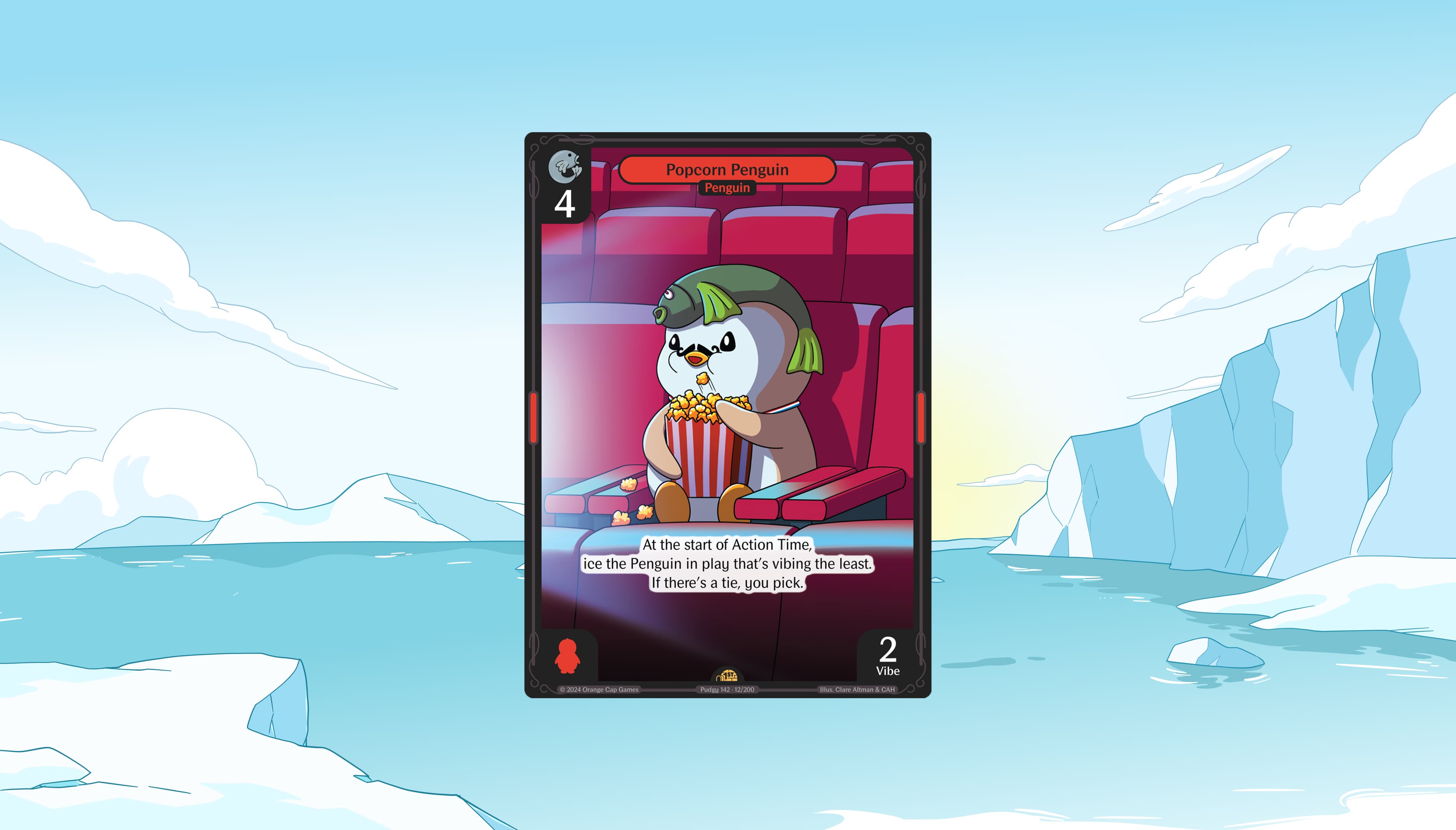
Popcorn Penguin's trigger occurs at the start of action time, before a Stack occurs.
Vibe Counters and Static Vibe Boosts
It's worth understanding the difference between permanent vibe counters and temporary vibe boosts:
• Vibe counters are counters placed on a Character that increase Vibe on that Character. They stay on the Character for as long as it remains in play and permanently increase its vibe.
• Vibe boosts "for the rest of this Cycle" are temporary and go away at the end of the current Cycle. They stack with the Character's base vibe and any counters it has, but don't become permanent.
If a Character would reach 0 vibe or below for any reason, whether from a temporary reduction or counter removal, it is immediately iced.
"Enters the Huddle" vs. "In the Huddle"
Some abilities trigger when a Character enters the huddle. These abilities fire once, at the moment the Character arrives in the Huddle. Other abilities are continuous and apply as long as the Character is in the huddle. The distinction matters when a Character bounces in and out of the huddle: "enters the huddle" abilities will re-trigger each time, while static abilities only apply while the Character is present.
Character cards are considered "Characters" only when they are in the huddle. When they're in your hand, deck, or ice, they're "Character cards." This distinction can matter for abilities that reference Characters in play versus Character cards in a zone.
Flopping and the Unfloppening
Cards in play are either flopped (turned sideways) or unflopped. Most cards enter play unflopped. Flopping is most commonly used as a cost for ACT abilities or to pay for Actions and the Character must be unflopped to pay this cost.
If a card is already flopped, it cannot be flopped again to pay a cost or produce resources.
At the end of every Cycle, the Unfloppening phase unflops all cards in play, resetting them for the next round. Some cards interact directly with this phase (like Juggling Penguin, which skips the Unfloppening for itself, and liL mOCkeR, which triggers when it becomes unflopped outside of the Unfloppening).
Targeting and the "Cannot Be Chosen" Ability
When an Action or ACT ability requires a choice or target, that choice must be made before the card is played or the ability is activated, and the target must be a legal one. If no legal target exists, the card cannot be played.
Some cards have a "cannot be chosen" ability. Any Action or ability that would choose such a Character or Relic simply cannot do so; that card is an invalid choice from the start.
It's also possible for a legal choice to become illegal by the time the Stack resolves. If that happens, the Action or ACT ability fizzles.
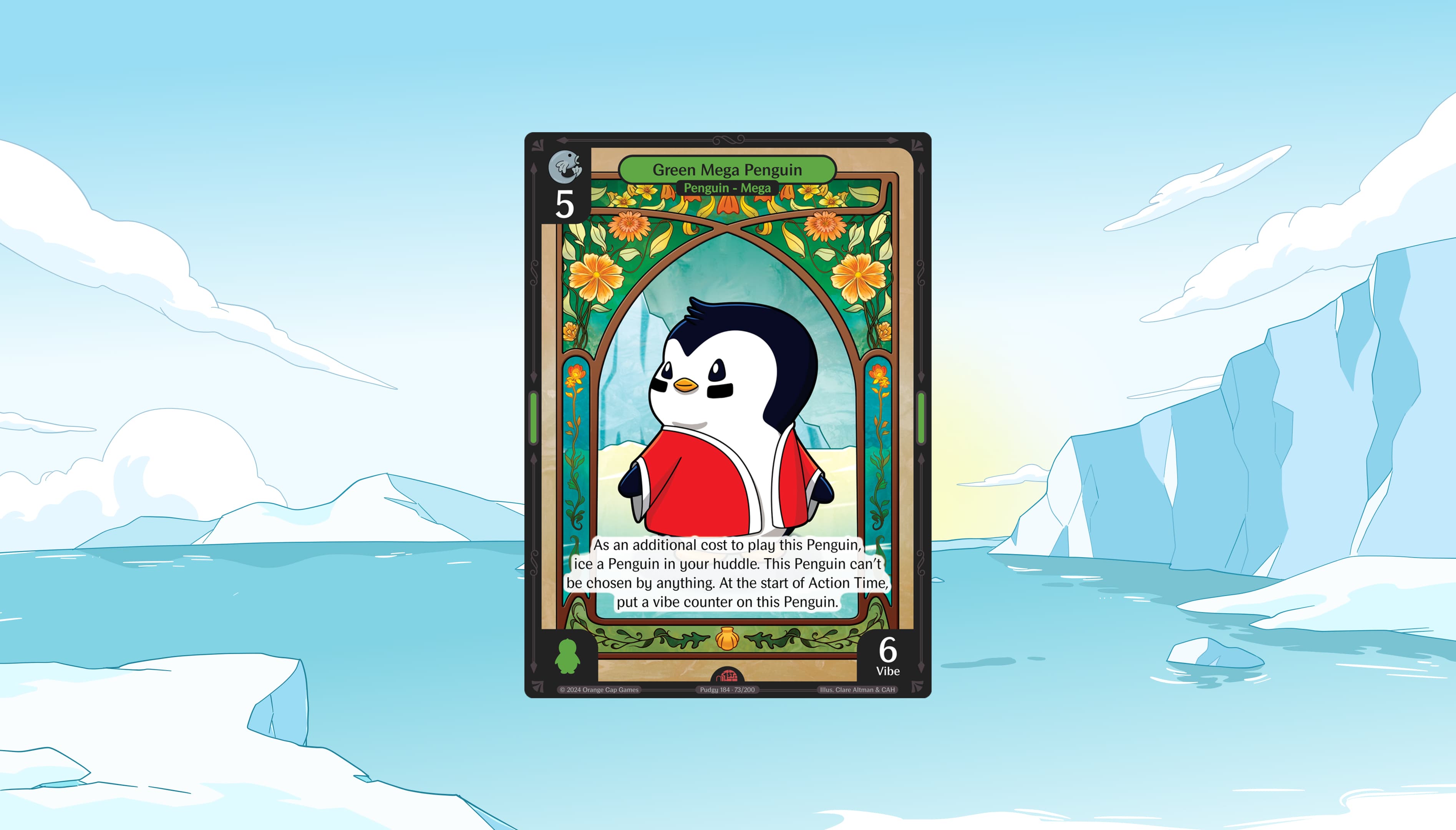
For example: Green Mega Penguin has a "cannot be chosen" ability, which normally makes it an invalid target. Mount Fuji is a Location that names a Character card when it enters play, removing that card's abilities. So, while Mount Fuji is in play, Green Mega Penguin loses its "cannot be chosen" protection and can be targeted legally.
If a player targets Green Mega Penguin while Mount Fuji is in play, but Mount Fuji is then iced before that Action resolves, Green Mega Penguin regains its "cannot be chosen" ability. The choice is now invalid, and the Action fizzles.
Relics and Icing: Staying in the Zone
Relics stay in play until they are iced by a card effect. Unlike Characters, Relics don't participate in Vibe Check and don't have vibe. When a Relic is iced, its continuous effects immediately stop applying.
Relics are a legal target for many bounce, ice, and interaction effects, making them both powerful support tools and targets in the opponent's plan. Relics also count toward your total permanence and the 15 card win condition.
___
There are many more interactions within Vibes, but this guide is a good starting point to put all of the pieces together. Below, you’ll find real game examples of the different topics we’ve covered. If you want to dive deeper into card interactions, join our Discord.
Example 1: Action Fizzles Due to Invalid Target
Concepts covered: Stack resolution, fizzle
Cards involved:
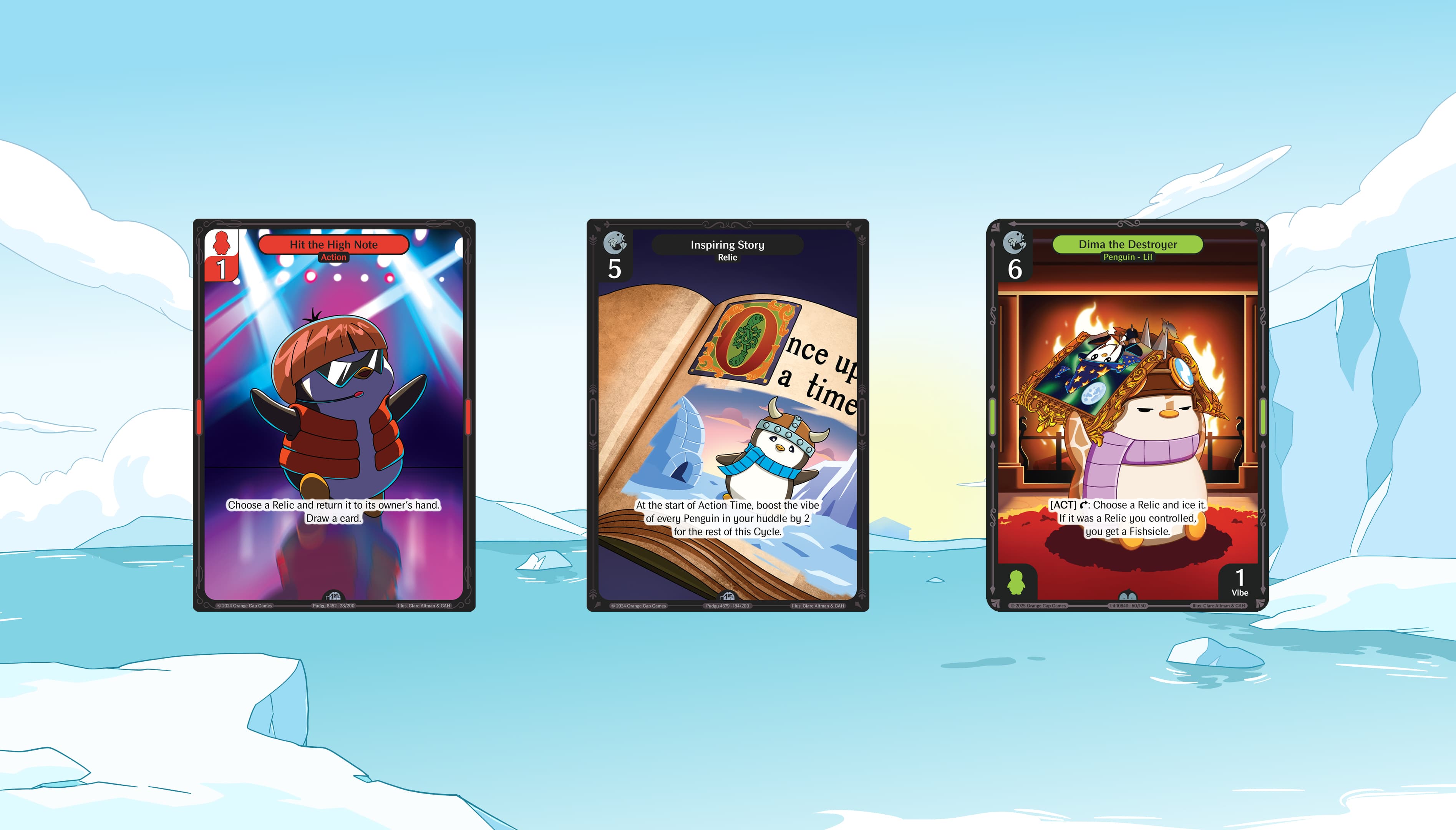
Hit the High Note — Choose a Relic and return it to its owner's hand. Draw a card.
Inspiring Story — At the start of Action Time, boost the vibe of every Character in your huddle by 2 for the rest of this Cycle.
Dima the Destroyer — ACT Fish: Choose a Relic and ice it. If it was a Relic you controlled, you get a Fishsicle.
Play by play:
Player A plays Hit the High Note, choosing Player B's Inspiring Story as the target.
Before both players pass priority, Player B activates Dima the Destroyer's ACT, choosing their own Inspiring Story as the target.
Both players pass. The Stack begins resolving.
Dima the Destroyer resolves first (last played). Inspiring Story is iced, and Player B receives a Fishsicle.
Hit the High Note resolves next. It checks its target — Inspiring Story — but Inspiring Story is no longer in the Relic zone. It has moved to Player B's ice.
Hit the High Note fizzles. Player A does not draw a card, and nothing is returned to hand.
Why this happens: The choice (Inspiring Story) was valid when Hit the High Note was played, but by the time it resolved, that card had changed zones. The choice is no longer valid, so the Action fizzles entirely.
Example 2: Racking Up Vibe Counters With Yellow
Concepts covered: Triggered abilities, stack vs. trigger queue, repeated enter-the-huddle cycling
Cards involved:
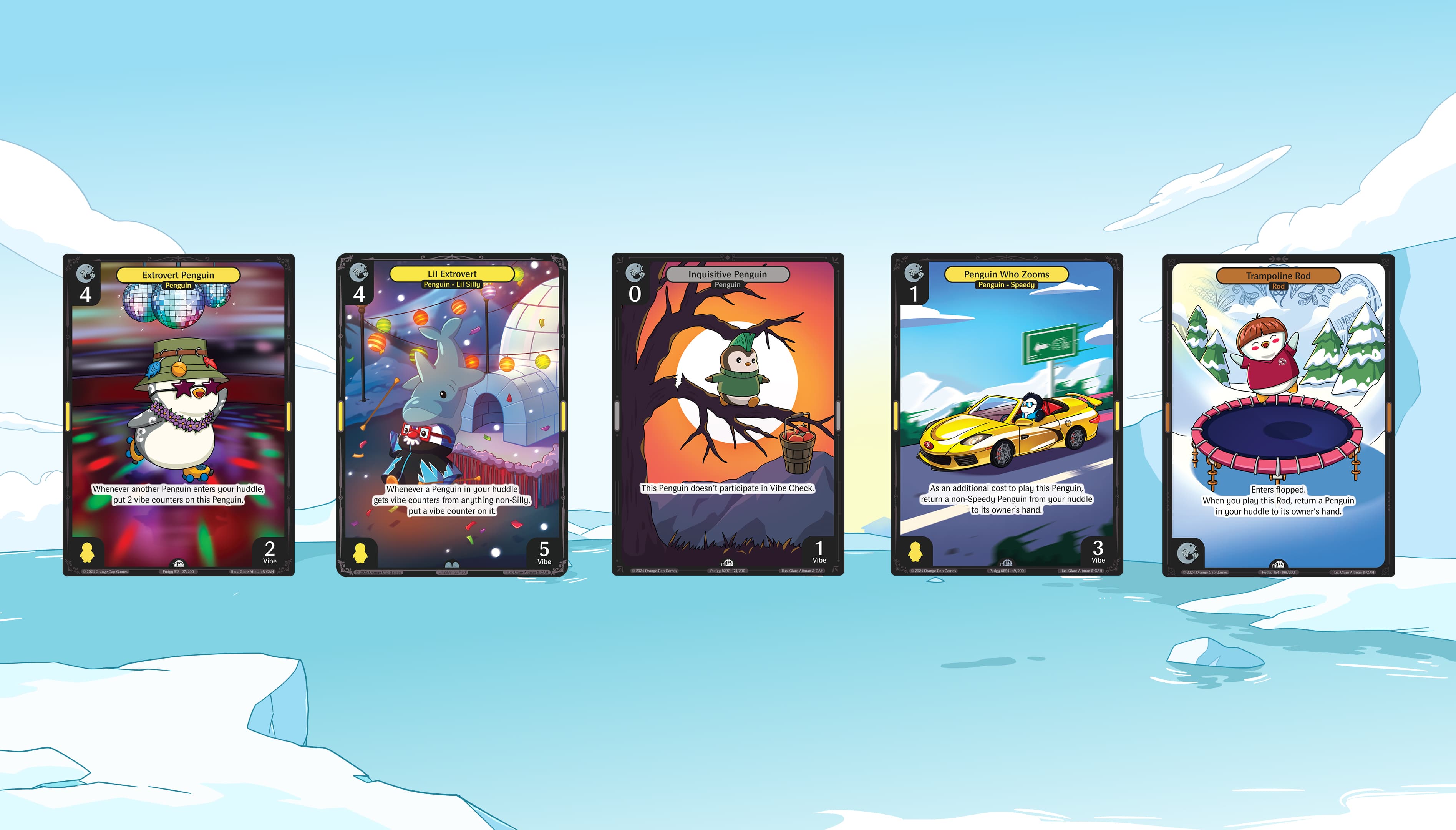
• Extrovert Penguin— Whenever another Character enters your huddle, put 2 vibe counters on this Character.
• Lil Extrovert — Whenever a Character in your huddle gets vibe counters from anything non-Silly, put a vibe counter on it.
• Inquisitive Penguin — This Character doesn't participate in Vibe Check.
• Penguin Who Zooms — As an additional cost to play this Character, return a non-Speedy Character from your huddle to its owner's hand.
• Trampoline Rod — Enters flopped. When you play this Rod, return a Character in your huddle to its owner's hand.
Play by play:
1. Player A controls Extrovert Penguin and Lil Extrovert in their huddle, each with 0 vibe counters.
2. Player A plays Inquisitive Penguin. It enters the huddle.
– Extrovert Penguin's ability triggers > it gets 2 vibe counters.
– Lil Extrovert's ability triggers > it sees that Extrovert Penguin received counters from a non-Silly effect, and puts 1 additional vibe counter on Extrovert Penguin.
– Result: Extrovert Penguin now has 3 vibe counters.
3. Player A plays Trampoline Rod. It enters flopped.
– Trampoline Rod's "when you play this Rod" ability triggers > Player A returns Inquisitive Penguin to their hand.
4. Player A plays Inquisitive Penguin again.
– Extrovert Penguin gets 2 more vibe counters from its own trigger.
– Lil Extrovert's trigger fires again, adding 1 more vibe counter to Extrovert Penguin.
– Extrovert Penguin now has 6 vibe counters total.
5. Player A plays Penguin Who Zooms, paying the additional cost by returning Inquisitive Penguin to hand. Each time Inquisitive Penguin re-enters, the cycle repeats.
Why this happens: Lil Extrovert's ability is watching for any Character in the huddle receiving vibe counters from a non-Silly source. Extrovert Penguin's trigger fires first (since it's the direct trigger from Inquisitive Penguin entering). Once Extrovert Penguin's counters are placed, Lil Extrovert sees that event and triggers. Because triggers resolve in FIFO order and Extrovert Penguin's trigger precedes Lil Extrovert's, the chain happens correctly every time.
The result is a powerful engine: each loop through Inquisitive Penguin adds 3 vibe counters to Extrovert Penguin (2 from its own trigger, 1 from Lil Extrovert), and the engine can continue as long as there's a way to bounce Inquisitive Penguin back to hand.
Example 3: Ordering Your Own Triggers (Single-Player Baron Decision)
Concepts covered: Trigger ordering, Baron player ordering their own simultaneous triggers
Cards involved:
Ascending Penguin — Whenever a Character enters your huddle, ice cards from the top of your deck equal to half that Character's vibe, rounded up.
Lil Who's Down Bad — When this Character enters the huddle, each player draws a card. (Vibe 7)
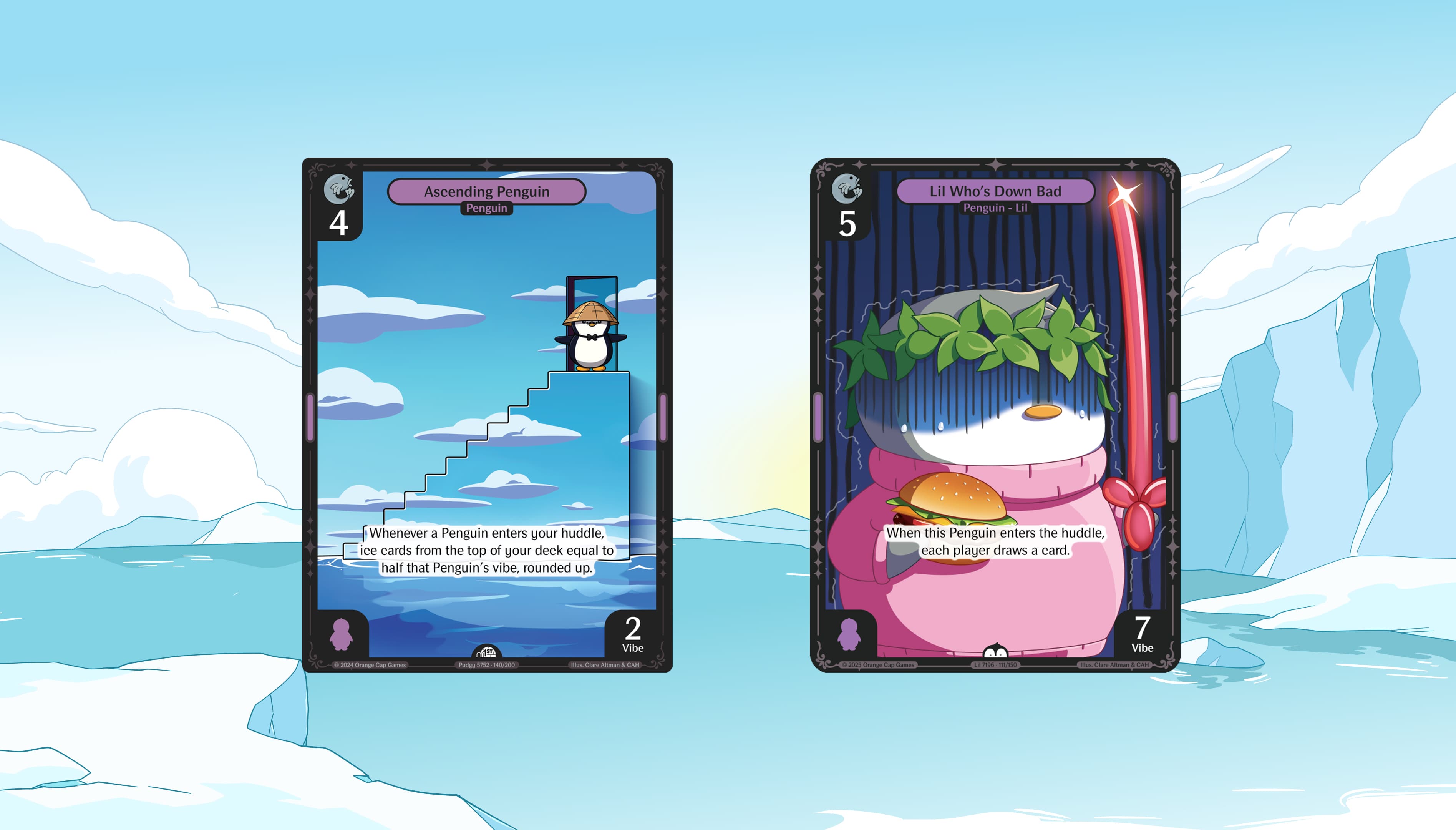
Play by play:
Player A controls the Baron and has Ascending Penguin in their huddle. Player A plays Lil Who's Down Bad (vibe 7) from their hand. Two triggers fire simultaneously:
Ascending Penguin's trigger → ice cards from the top of your deck equal to half of 7 rounded up = 4 cards.
Lil Who's Down Bad's enter-the-huddle trigger → each player draws a card.
Because Player A controls the Baron, they choose the order their triggers resolve.
Option A: Ascending Penguin resolves first Player A ices the top 4 cards of their deck, then draws a card. The card drawn is whatever is now on top after the icing.
Option B: Lil Who's Down Bad resolves first Player A draws a card first (from the current top of deck), then ices the next 4 cards.
Player B also draws a card from Lil Who's Down Bad's trigger, but since they don't control the Baron, their trigger resolves after Player A's queue is finished.
Why order matters: The card Player A draws is different depending on which trigger resolves first. If they want to draw before burying cards, they can choose accordingly. The Baron player has full discretion over the ordering of their triggers.
Example 4: Trigger Ordering Across Both Players
Concepts covered: Trigger ordering between players, Baron player resolves first, triggers don't fizzle when their source is iced
Cards involved:
Popcorn Penguin (controlled by Player A, Baron) — At the start of Action Time, ice the Character in play that's vibing the least. If there's a tie, you pick.
Popcorn Penguin (controlled by Player B) — Same ability.
Play by play:
Action Time begins. Both players control a Popcorn Penguin, and both trigger simultaneously.
Player A's trigger resolves first because they hold the Baron. Both Popcorn Penguins share the lowest vibe, so there's a tie — Player A chooses. Player A ices Player B's Popcorn Penguin.
Player B's Popcorn Penguin has been iced, but its trigger still resolves. Triggers do not fizzle when their source is removed from play. The trigger fired while it was in play, and that's all that matters. Player B's Popcorn Penguin resolves normally, icing the Character now vibing the least.
Why this matters: This is a key distinction between triggers and ACT abilities. An ACT ability fizzles if the source Penguin is iced before it resolves. Triggers work differently. Once a trigger fires, it will resolve regardless of what happens to the card that generated it.
Have a ruling question or an interaction you want covered? Drop a message in our Discord!