





Ban List Update
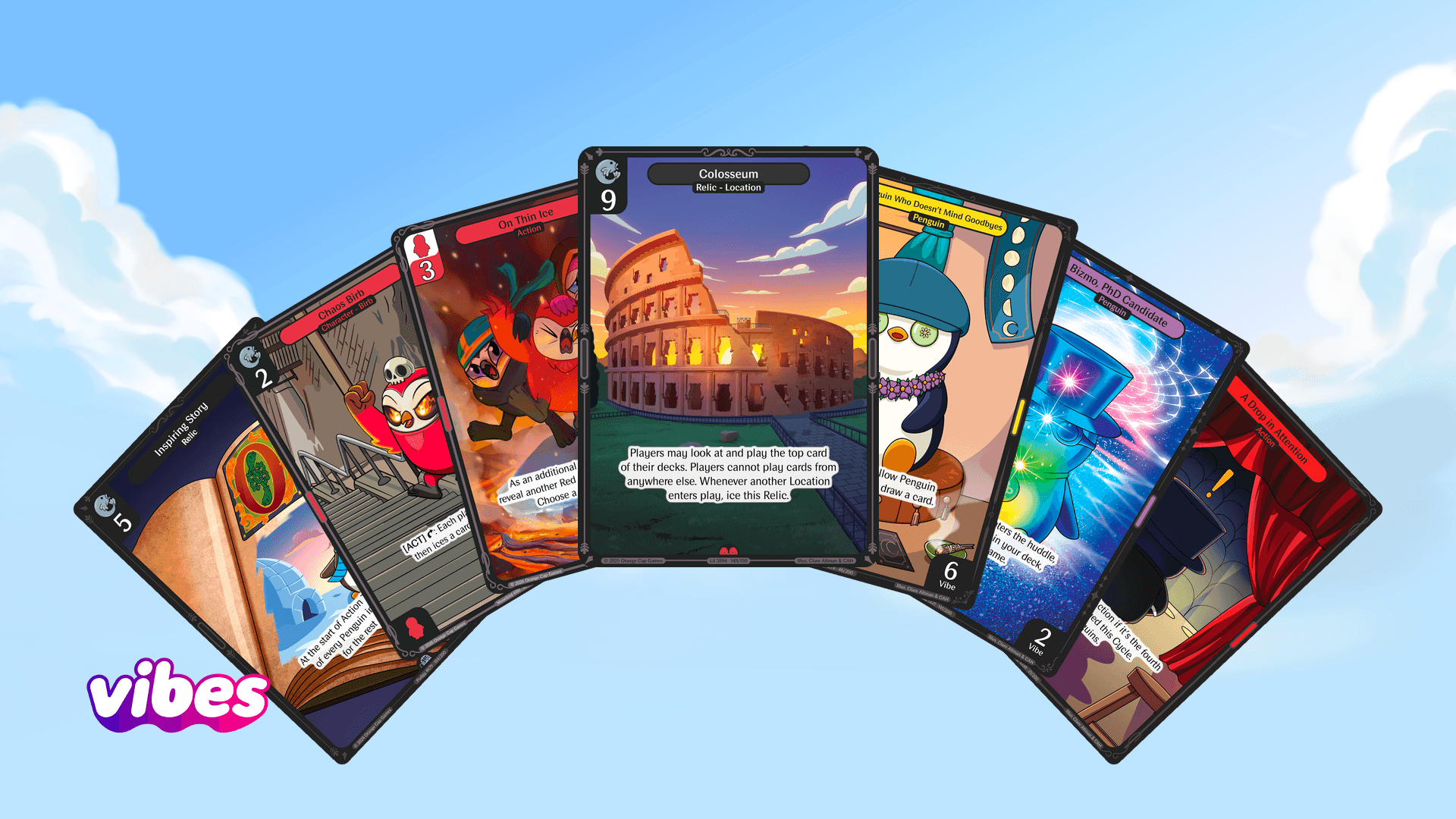
Vibes TCG Ban Announcement
The goal of this ban is simple: shake up the metagame and make games more fun to play.
Championship of the Americas featured a diverse metagame, and the perceived “boogeyman” of the format didn’t even win the tournament. So this isn’t a case where we believe the format is fundamentally broken from a competitive-balance perspective.
What we have seen, though, is the emergence of several play patterns that we don’t think are especially healthy or enjoyable.
Historically, Elliot and I have approached bans with a philosophy of banning as few cards as possible. We don’t like the idea of players owning cards they suddenly can’t use, and we especially don’t like invalidating entire decks that people have spent time and money building.
But there’s also clear fatigue with the current meta, and we think this is an opportunity to try something different.
For this ban, we’re adopting a slightly different philosophy:
Ban the things that consistently make games less fun.
Several cards on this list aren’t being banned because they’re necessarily too powerful. They’re here because the play patterns they create make games less interactive, excessively slow, overly dependent on RNG, or hostile to strategies we’d like to see have room to exist.
With Set 4 on the horizon, we think this is an interesting window to ask: what happens if we remove a bunch of our design mistakes at once and let an entirely new meta emerge?
So that’s what we’re doing.
Note, that any starter decks are legal for play, right out of the box, even if it contains a banned card. For a full banned card list, head over to our ban list.
Banned Cards in this Update:
Inspiring Story
Chaos Birb
On Thin Ice
Colosseum
Penguin Who Doesn’t Mind Goodbyes
Bizmo, PhD Candidate
A Drop in Attention
For a full rationale of each card and why, read on below.
Inspiring Story
The “at the start of action time” mechanic being non-interactable is something we’ve come to like less and less.
I think about Inspiring Story a little like SUVs.
SUVs perform better in crashes against smaller cars because they’re bigger. As more people drive SUVs, your likelihood of getting into an accident with one increases. Eventually, game theory starts pushing everyone toward driving an SUV for safety—even if they’d personally rather drive something smaller.
Inspiring Story has created a similar dynamic.
Basically everyone plays it because having Inspiring Story when your opponent doesn’t is such a meaningful advantage. That kind of ubiquity, combined with the fact that the card doesn’t create particularly interactive or interesting synergies in most decks, is a strong reason for us to say goodbye to it.
Conspicuously absent from this list is Popcorn Penguin. We expect Popcorn Penguin to become meaningfully weaker without Inspiring Story, and we still think its presence in the format serves an important role in keeping Yellow decks in check.
Chaos Birb
The biggest issue with Chaos Birb probably isn’t what most people expect.
Its synergy with Relaxing Birb is obviously strong, but we don’t think that interaction alone is enough to justify a ban.
The bigger problem is what happens in Chaos Birb mirror matches, particularly when both decks are trying to finish the game with Bunkus/Binkus-style win conditions.
The back-and-forth between those win conditions can take an extremely long time, and Chaos Birb creates an unusually high number of decisions for both players every turn.
The result is a play pattern that dramatically slows down the game without necessarily making those games more interesting.
That’s not something we want to encourage.
On Thin Ice
Historically, Red has been very good at preying on go-wide strategies while struggling against go-tall strategies.
That weakness is important to Red’s identity.
On Thin Ice effectively removes the traditional “Red can’t deal with a Penguin with more than 10 Vibe” limitation without requiring the deck to splash Purple for cards like Layer a Lasagna.
We think Red is healthier when that limitation exists, so On Thin Ice is leaving the format.
Colosseum
Losing to Colosseum just isn’t particularly fun.
In general, we’re cautious about “prison” strategies, and Colosseum combines that style of gameplay with a significant amount of randomness.
Sometimes your opponent plays Colosseum and you topdeck the Fuji. Great. But too many games come down to Colosseum hitting the board and one player simply being unable to play the cards in their hand.
It also disproportionately punishes strategies built around Actions—and playing Actions is something we generally want to encourage.
For those reasons, Colosseum is banned.
Penguin That Doesn’t Mind Goodbyes
This is probably the ban I’ve lost the most sleep over.
Yellow Yum Yum has existed since the beginning of Vibes, and I have a lot of sympathy for the player who bought a Yellow starter deck, slowly upgraded it from a precon into a competitive deck, and is now being told they need to rethink part of that strategy.
That said, I still believe Yellow will be very good after these changes and may very well remain one of the decks to beat, just as it was in Season 0.
The issue with Penguin Who Doesn’t Mind Goodbyes is that when it works, it works too well.
That becomes especially relevant with Inspiring Story leaving the format and the resulting changes to Popcorn Penguin’s viability.
More broadly, we don’t think one-sided board wipes create particularly enjoyable games, so we’re removing this one.
Bizmo, PhD Candidate
This one is fairly straightforward.
Winning the game on your own turn in a way your opponent effectively cannot interact with isn’t the kind of gameplay we want to encourage.
For what it’s worth, I still think the Purple Ascending Penguin deck is very strong after this change—especially because banning Chaos Birb will likely reduce the total number of Binkis in the format.
So while Bizmo is leaving, we don’t expect the archetype itself to disappear. A Drop in Attention
Winning a game of Vibes should involve playing a game of Vibes, currently a drop in attention is enabling a deck that wins games of Vibes without playing Vibes. With the red purple hats deck it’s become too easy to accomplish the 4 actions restriction on this card and therefore we think removing it opens the meta up more.
One Final Note
We don’t necessarily think all of these cards are gone forever.
Part of the reason we’re comfortable making a bigger change here is that the period before Set 4 gives us an opportunity to experiment.
We want to see what players build when some of the format’s most ubiquitous and restrictive cards disappear. We want fringe strategies to have room to breathe. And, most importantly, we want games of Vibes to be fun.
We’re also especially excited to see more fringe decks emerge. If some Tier 3 decks become Tier 2 decks in this new environment, that gives us much better information about what those archetypes are actually missing.
It helps us understand whether a shell is fundamentally viable but missing one or two important tools, and gives us better data on what kinds of cards we can introduce in future releases to help those strategies make the jump from Tier 2 into true Tier 1 contenders.
That kind of information is incredibly valuable to us as designers. A healthier and more open metagame doesn’t just create more variety for players today—it also helps us make better cards and support more archetypes in future sets.
We’re excited to see what everyone builds and what this new meta looks like.
- Spencer